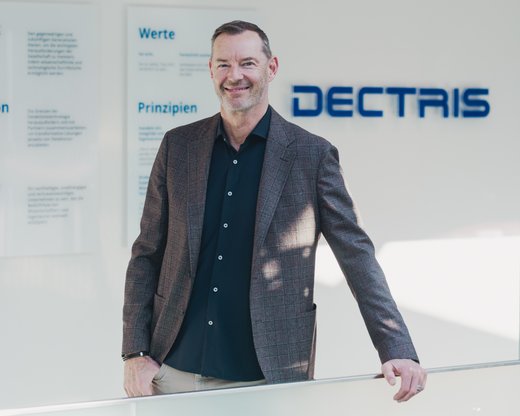
When DECTRIS was founded in 2006, replacing traditional CCD detectors and film with Hybrid Photon Counting (HPC) pixel sensors seemed almost impossible. Today, DECTRIS technology powers groundbreaking research across synchrotrons, electron microscopes, and industrial laboratories worldwide, delivering instruments precise enough to reveal what was previously invisible.
To mark our 20th anniversary, our founder Christian Brönnimann sat down to reflect on the early risks, debugged cleanrooms, and technology breakthroughs that transformed a small academic spin-off into a trusted partner for cutting-edge research and innovation.

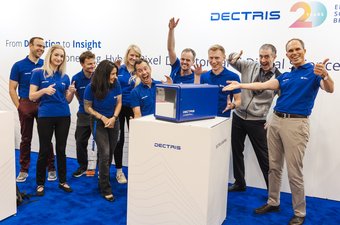
Among the highlights at the IUCr 2026 were DECTRIS JUNGFRAU launch, an Exhibition and Scientific Contributions, a DECTRIS Party, and lots of fun times!
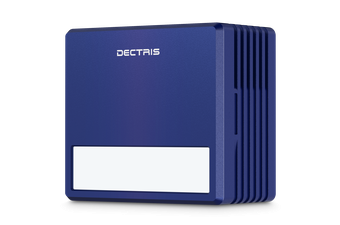
How far can you push resolution in a 2D detector without sacrificing versatility and overall performance in laboratory XRD?
That question led us to the newest member of the POLLUX family: POLLUX PANORAMA HR. Launched at EPDIC 2026, our high-resolution detector combines a pixel pitch of just 37.5 µm along the long axis of the detector with the flexibility of a 2D pixel detector, opening new possibilities for high-resolution laboratory XRD.
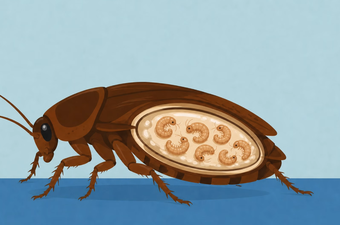
Sometimes the most unexpected scientific discoveries can lead to the most memorable stories.
Ramaswamy Subramanian, a professor in Purdue University’s Department of Biological Sciences; Leonard “Leo” Chavas, structural biologist and general manager and representative director of DECTRIS Japan; and Nathan Coussens, director of the In Vitro Evaluation and Molecular Pharmacology Laboratories at the Frederick National Laboratory for Cancer Research, received the 2026 Ig Nobel Prize in Chemistry for their research into how a species of cockroach nourishes its developing embryos.
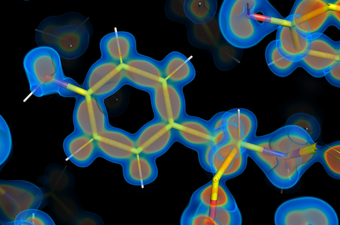
Through Advanced X-Ray Diffraction Techniques , researchers have determined the structure of the protein rubredoxin at 0.43 Ångström resolution, marking the highest resolution ever achieved for a protein structure.

DECTRIS CLOUD Is Now DECTRIS D.LAB: Extending The Mission From Capturing The World's Finest Data To Preserving The Scientific Knowledge That Follows. On its 20th anniversary, DECTRIS extends its mission further, from detecting the invisible to transforming it into the understandable with a platform designed to connect data, analyses, compute, and scientific context into one home for modern research.
Modern Macromolecular crystallography (MX) relies on a foundation of trusted, highly optimized software to translate raw diffraction images into meaningful structural biology insights. For decades, XDS - the software program developed by Wolfgang Kabsch - has served as a critical component in this workflow. Max Planck Innovation and Wolfgang Kabsch have chosen to entrust DECTRIS with the long-term stewardship, distribution, and support of XDS through an exclusive licensing agreement.
Through this transition, DECTRIS ensures that (a) XDS remains freely available to academic researchers without any version-bound time restrictions, (b) establishes a transparent and stable licensing framework for commercial users, and (c) introduces a rigorous reproducibility framework to track algorithmic consistency across future hardware generations.
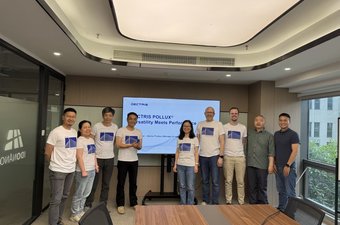
On May 19, 2026, we traveled to China to meet our OEM partner IDONANO, a pioneer in China's domestic high-end XRD market. During this visit, we held a workshop giving detailed insights into the features, advantages, and benefits of POLLUX detectors. Following the workshop, we commissioned a prototype and performed the first successful tests of the new POLLUX detector on IDONANO’s laboratory XRD systems. POLLUX is an important milestone in our partnership and will unlock unprecedented performance on IDONANO’s instruments to address emerging challenges in materials science, semiconductor metrology, and nanotechnology.

HIMEJI, JAPAN | April 2026 – DECTRIS Japan K.K., a subsidiary of the global leader in Hybrid Photon Counting (HPC) detector technology, DECTRIS Ltd., today announces a change in its executive leadership. Dr. Takeyoshi Taguchi has stepped down as Representative Director, with Dr. Leonard Chavas appointed as his successor to lead the company into its next phase of growth.

This white paper explores how DECTRIS’s Hybrid Photon Counting detectors enhance SAXS and WAXS experiments, enabling high-resolution, low-noise data collection in both synchrotron and laboratory environments.


