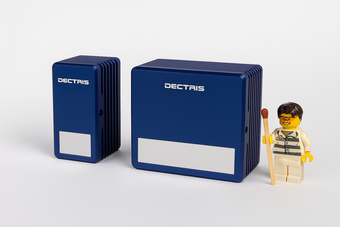
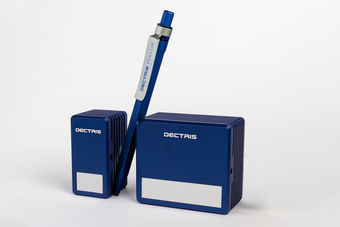
Extending the POLLUX Family: Introducing POLLUX PANORAMA HR
A 5-minute read
How far can you push resolution in a 2D detector without sacrificing versatility and overall performance in laboratory XRD? That question led us to the newest member of the POLLUX family: POLLUX Panorama HR.
Launched at EPDIC 2026, our high-resolution detector combines a pixel pitch of just 37.5 µm along the long axis of the detector with the flexibility of a 2D pixel detector, opening new possibilities for high-resolution laboratory XRD.
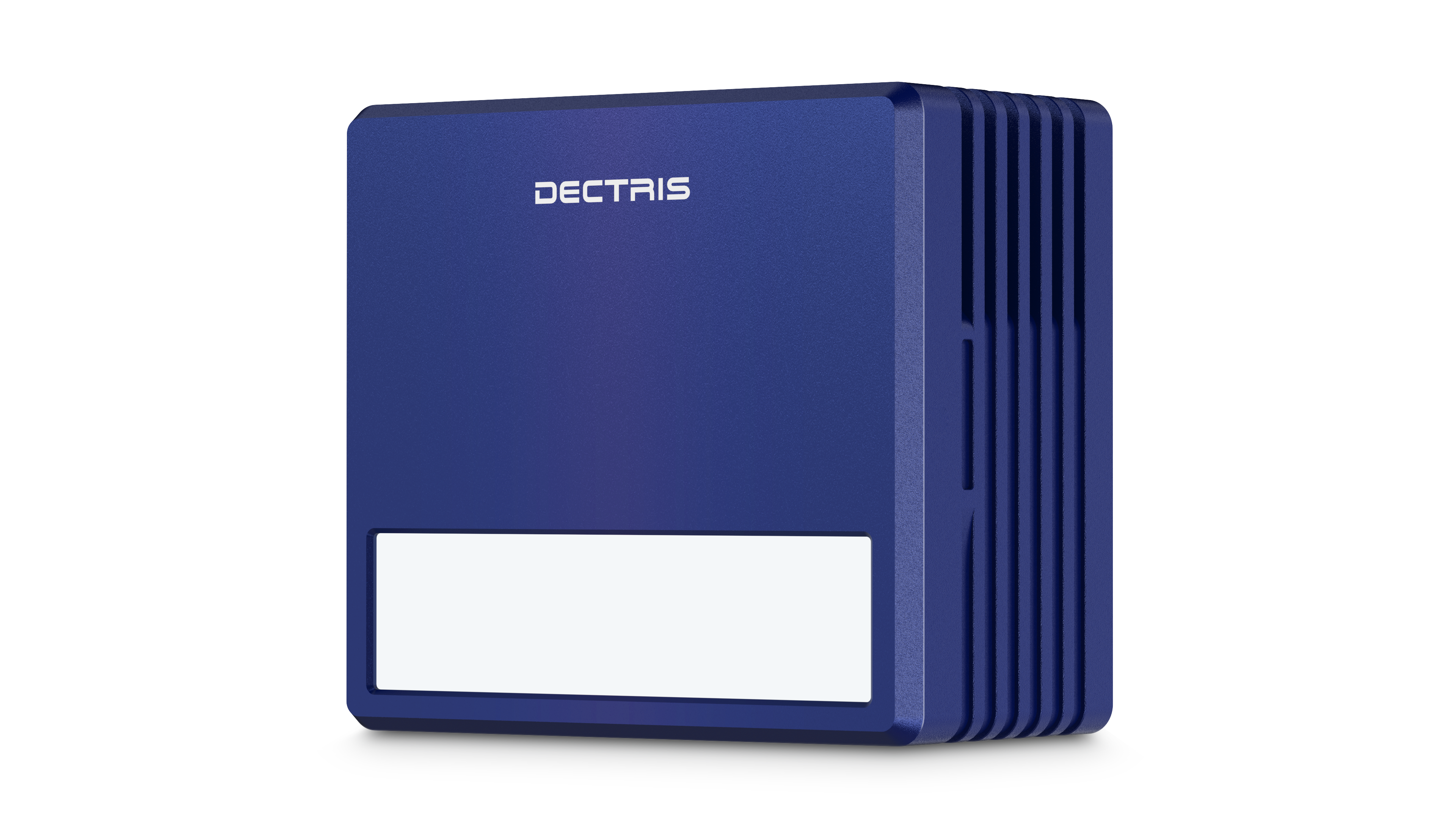
POLLUX PANORAMA HR sets a new benchmark for 1D resolution in laboratory XRD, while retaining the versatility of a 2D detector
From Versatility to High 1D Resolution
When we introduced POLLUX in 2025, we set out to create a compact, energy-discriminating detector that balances the characteristics that matter most in laboratory XRD: energy resolution, count rate and active area.
The result is a versatile detector for applications ranging from powder XRD and residual stress analysis to reflectometry, spectroscopy and scattering. Its precise dual energy discrimination helps suppress fluorescence and high-energy background, while its high count-rate capability and wide dynamic range support high-intensity applications. Further, active areas that are remarkably large for this class of detectors speed up measurements.
But not every XRD measurement has the same priorities.
For some applications, the 1D resolution the detector achieves is particularly important. This is especially relevant when measurements use a crystal monochromator and pure Kα1 radiation, where the high intrinsic resolution of the measurement can be fully exploited.This is where POLLUX Panorama HR comes in.
Narrow Pixels, Finer Peak Sampling
One of the hallmarks of our DECTRIS MYTHEN2 detector is its high 1D resolution, enabled by a strip width of 50 µm. With POLLUX Panorama HR, we have taken this approach further, reducing the pixel pitch to just 37.5 µm. This is enabled by the novel rectangular pixel design of 37.5 × 150 µm2 (see Fig. 1).
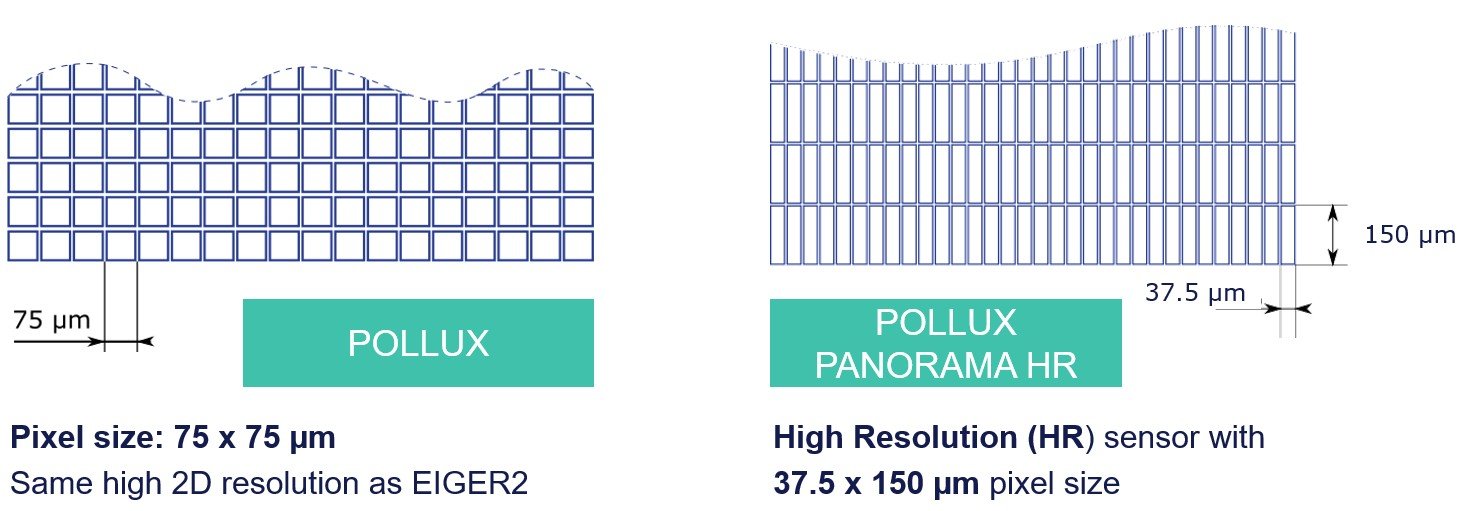
Fig. 1 Illustration of the pixel arrays of POLLUX (PANORAMA) and POLLUX PANORAMA HR showing the square and rectangular pixel shape respectively. The gaps between the pixels solely included for illustrative purposes. The sensor of both remains a monolithic silicon crystal without gaps between the pixels.
The smaller pixel pitch enables finer sampling of diffraction peaks or any signal in reciprocal space and sets a new benchmark for 1D resolution in laboratory XRD, while retaining the versatility of a 2D detector.
“For measurements using a monochromator or pure Kα1 radiation, the detector needs to preserve the resolution that the X-ray optics can deliver. The smaller pixel pitch of Panorama HR allows us to make better use of that resolution while retaining the benefits of a 2D detector.”
— Marcus Müller, Senior Product Manager X-ray Analytics
The benefits are particularly relevant for high-resolution XRD techniques and reciprocal space mapping. High-precision powder XRD measurements using pure Kα1 radiation can also benefit, improving results in ab-initio structure determination, Rietveld refinement and complex multi-phase quantification.
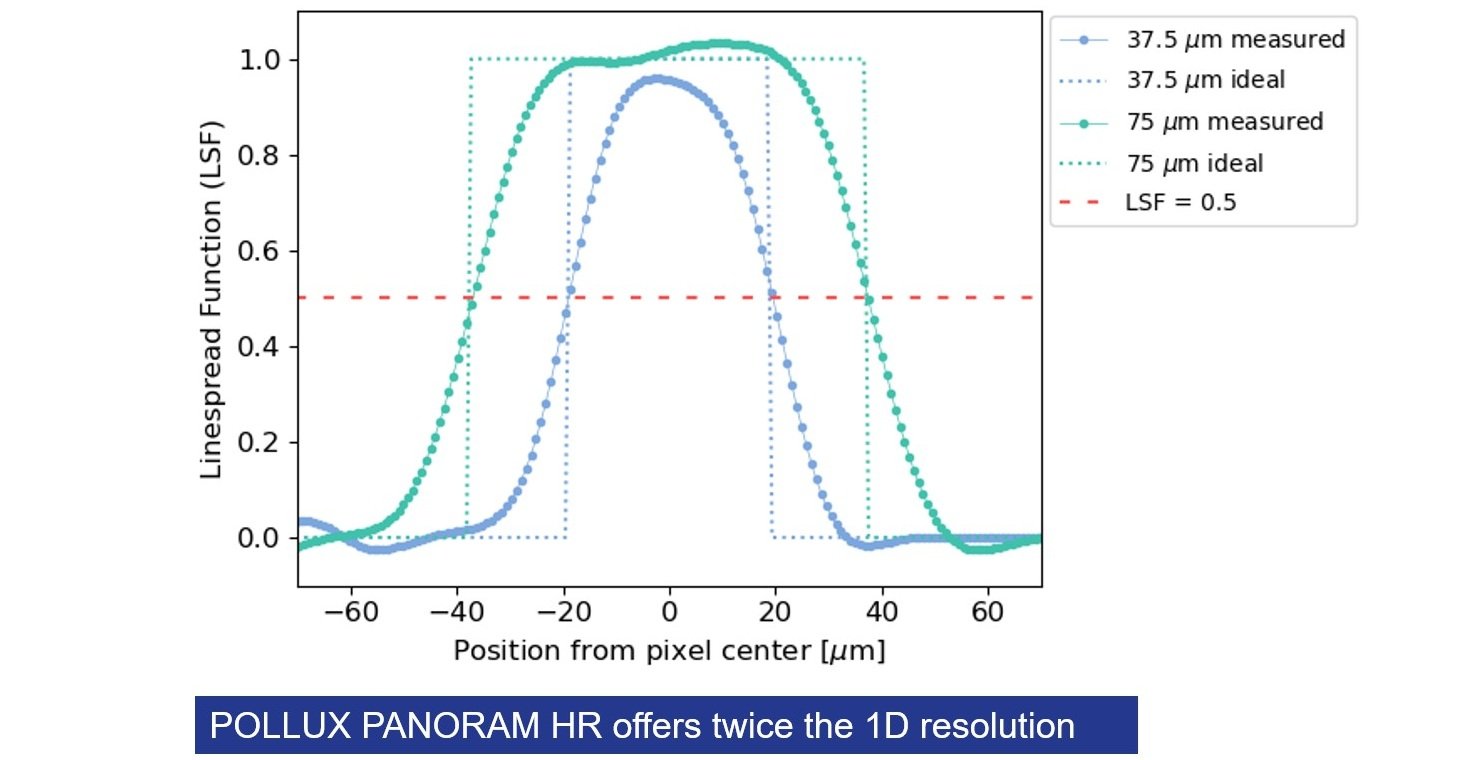
Fig. 2 Linespread function of POLLUX and POLLUX PANORAMA HR measured at 50% threshold energy.
Which POLLUX Detector is Right for You?
POLLUX Panorama HR is not intended to replace the existing POLLUX detectors. It completes the family by addressing a different measurement priority.
POLLUX is the starting point: a compact and economical detector combining versatility with a strong balance of energy resolution, count rate and active area.
POLLUX PANORAMA builds on this with a larger active area, making it the choice when broader angular coverage in a single detector position is important.
POLLUX PANORAMA HR takes a different direction, using its 37.5 µm pixel pitch along the long axis of the detector to achieve high 1D resolution in combination with the overall excellent performance of the POLLUX family.
Together, the three detectors give laboratory XRD users the flexibility to choose the configuration that best matches the priorities of their measurements.
Introducing POLLUX PANORAMA HR at EPDIC 2026
We officially launched POLLUX Panorama HR during our lunchtime seminar at the European Powder Diffraction Conference (EPDIC) 2026 in Crans-Montana, Switzerland.
Watch the full seminar recording to hear the story behind the new detector and explore how its 37.5 µm pixel design enables high 1D resolution. The seminar also includes a customer perspective from Proto Manufacturing and an application example showing how POLLUX's energy discrimination can suppress fluorescence and improve peak-to-background ratios in laboratory XRD.